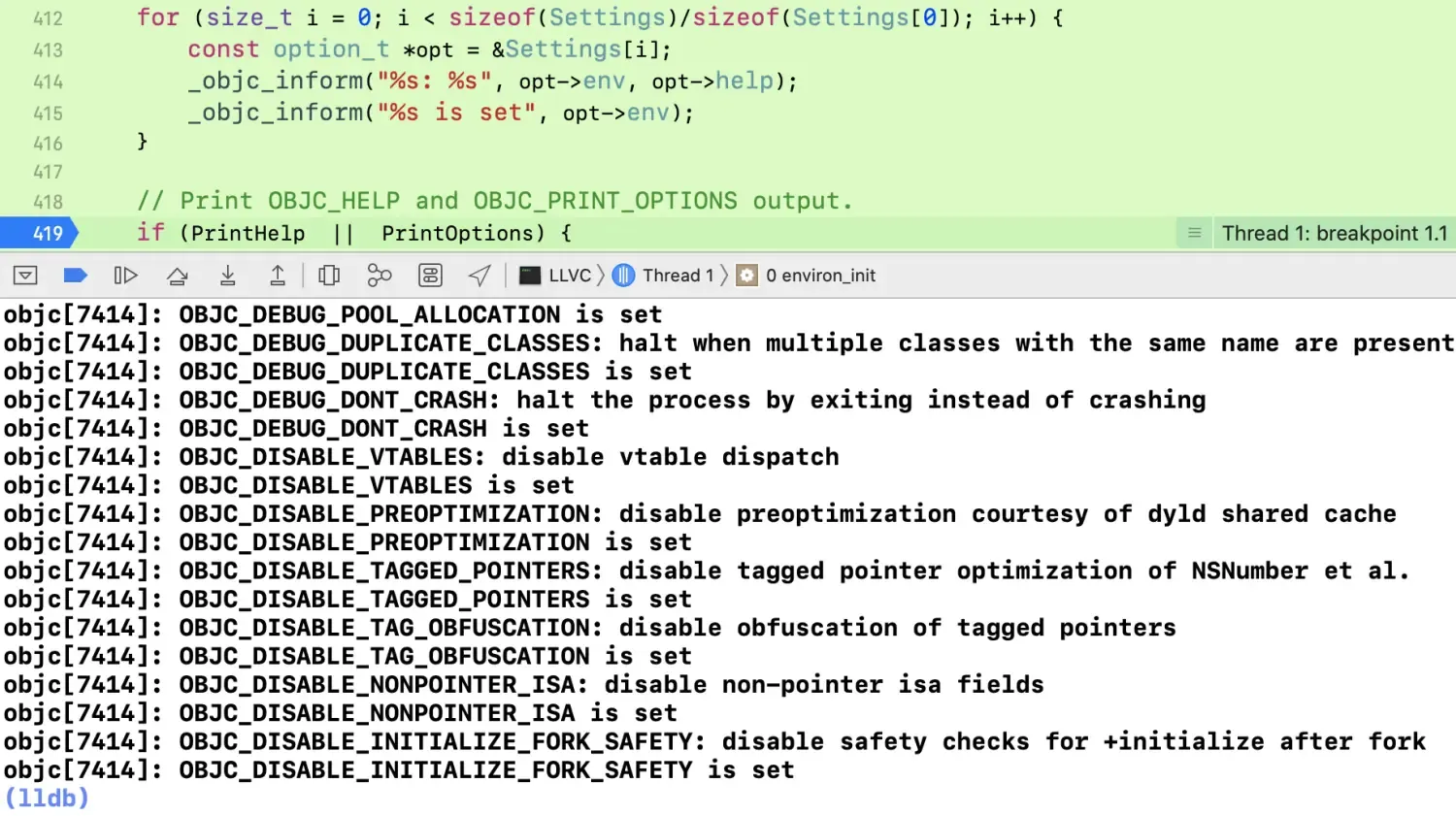
此外,还可以通过终端命令,打印一个项目的所有环境变量
//1. cd 到任意一个项目的根目录
//2. 运行终端命令
export OBJC_hrlp = 1
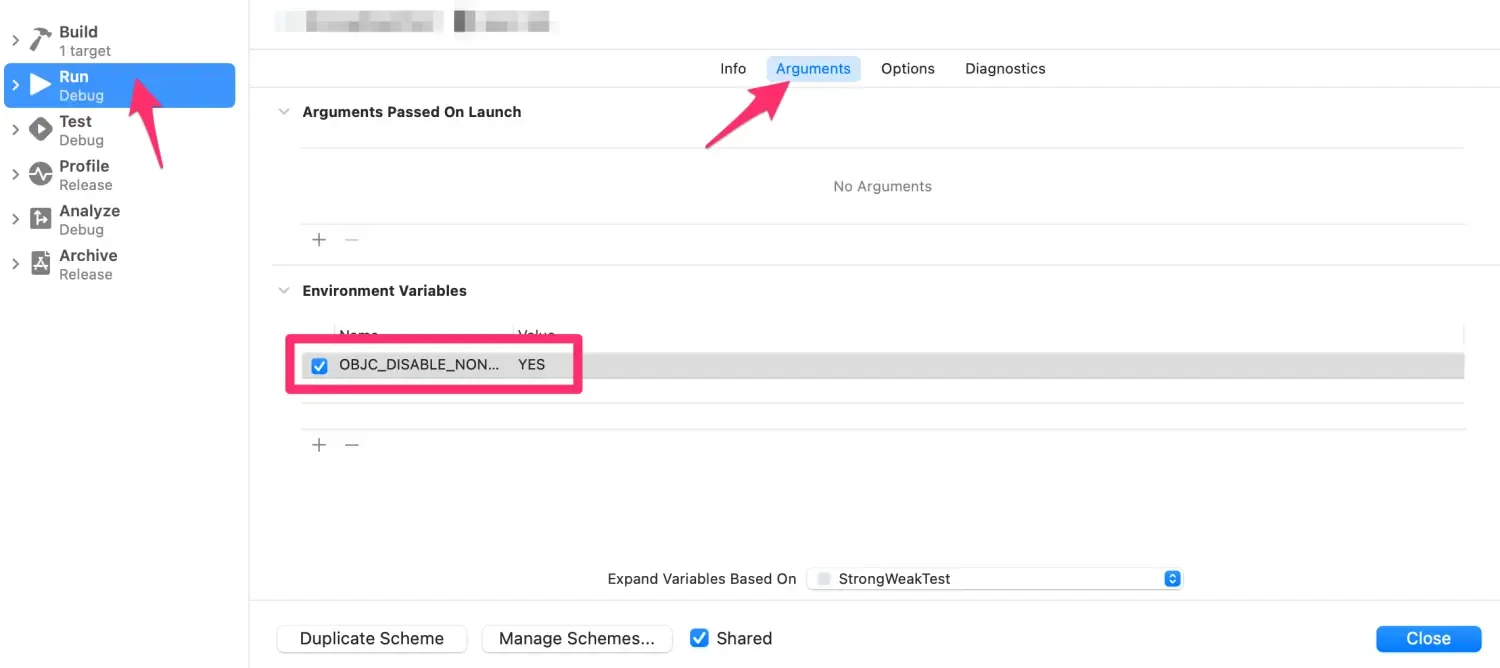
以上这些环境变量,都可以通过 Xcode -> Product -> Scheme -> Edit Scheme... -> Run -> Arguments -> Environment Variables 来配置,举几个经常使用的环境变量
- DYLD_PRINT_STATISTICS
设置为 YES,控制台就会打印 App 加载时长(pre-main 耗时)
- OBJC_DISABLE_NONPOINTER_ISA
杜绝生成相应的 nonpointer isa(nonpointer isa 指针地址末尾为 1 ),生成的都是普通的 isa
- OBJC_PRINT_LOAD_METHODS
打印 Class 及 Category 的 + (void)load 方法的调用信息
OBJC_DISABLE_NONPOINTER_ISA 环境变量
下面我们分别打印配置该环境变量与不配置该环境变量有什么不同,首先我们设置 OBJC_DISABLE_NONPOINTER_ISA 的 Value 为 YES
- 添加如下代码,运行,打印
isa
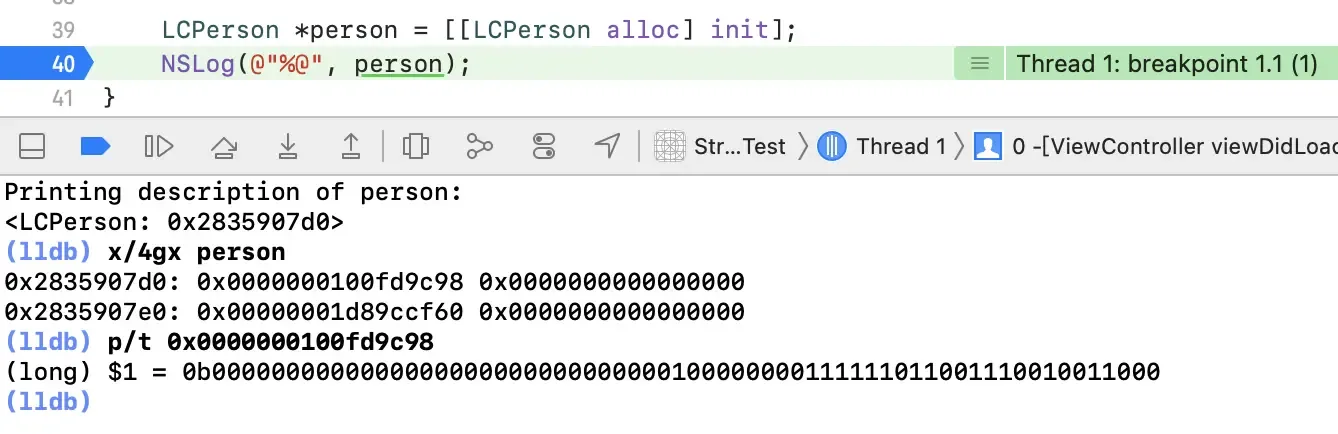
由打印结果可知,当前 isa 的最后一位为 0(未做优化的 isa)
- 将该环境变量删除,再重新运行并打印
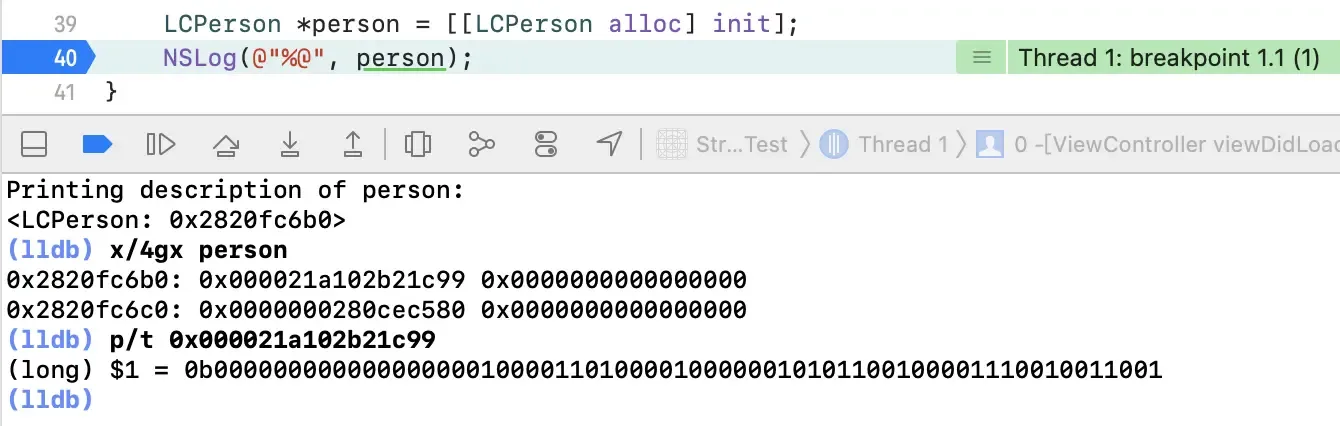
由打印结果可知,当前 isa 的最后一位为 1(已做优化的 isa)
tls_init 线程key的绑定
主要是 本地线程池 的初始化以及析构,源码如下
void tls_init(void)
{
#if SUPPORT_DIRECT_THREAD_KEYS // 本地线程池,用来进行处理
    pthread_key_init_np(TLS_DIRECT_KEY, &_objc_pthread_destroyspecific); // 初始init
#else
    _objc_pthread_key = tls_create(&_objc_pthread_destroyspecific);// 析构
#endif
}
static_init C++ 静态构造函数的调用
运行系统级别的 C++ 静态构造函数,在 dyld 调用我们的静态构造函数之前,libc 调用 _objc_init 方法,因此需要自己做。(系统级别的 C++ 构造函数先于自定义的 C++ 构造函数运行)
/***********************************************************************
* static_init
* Run C++ static constructor functions.
* libc calls _objc_init() before dyld would call our static constructors,
* so we have to do it ourselves.
**********************************************************************/
static void static_init()
{
    size_t count;
    auto inits = getLibobjcInitializers(&_mh_dylib_header, &count);
    for (size_t i = 0; i < count; i++) {
        inits[i]();
    }
}
runtime_init 运行时的初始化
这一部分主要是运行时的初始化,分为 分类的初始化 和 已经创建的类的初始化(后续会展开分析,这里就不做详细讲解了)。源码如下
void runtime_init(void)
{
    objc::unattachedCategories.init(32);
    objc::allocatedClasses.init();
}
exception_init 初始化异常处理
主要是初始化 libobjc 的异常处理系统,注册异常处理的回调,从而监控异常的处理,其源码如下
/***********************************************************************
* exception_init
* Initialize libobjc's exception handling system.
* Called by map_images().
**********************************************************************/
void exception_init(void)
{
    old_terminate = std::set_terminate(&_objc_terminate);
}
程序异常即我们常说的 crash,是指程序的代码错误和发生了系统不允许的一些指令,然后系统会给的一些信号,crash 发生时会来到 _objc_terminate,源码如下
/***********************************************************************
* _objc_terminate
* Custom std::terminate handler.
*
* The uncaught exception callback is implemented as a std::terminate handler.
* 1. Check if there's an active exception
* 2. If so, check if it's an Objective-C exception
* 3. If so, call our registered callback with the object.
* 4. Finally, call the previous terminate handler.
**********************************************************************/
static void (*old_terminate)(void) = nil;
static void _objc_terminate(void)
{
    if (PrintExceptions) {
        _objc_inform("EXCEPTIONS: terminating");
    }

    if (! __cxa_current_exception_type()) {
        // No current exception.
        (*old_terminate)();
    }
    else {
        // There is a current exception. Check if it's an objc exception.
        @try {
            __cxa_rethrow();
        } @catch (id e) {
            // It's an objc object. Call Foundation's handler, if any.
            (*uncaught_handler)((id)e); // oc 对象,抛出异常
            (*old_terminate)();
        } @catch (...) {
            // It's not an objc object. Continue to C++ terminate.
            (*old_terminate)();
        }
    }
}
此时,我们想跟进 uncaught_handler,发现只能找到它的定义,那么全局搜索下看在哪个地方调用了,在源码中找到了它的赋值
/***********************************************************************
* objc_setUncaughtExceptionHandler
* Set a handler for uncaught Objective-C exceptions.
* Returns the previous handler.
**********************************************************************/
objc_uncaught_exception_handler
objc_setUncaughtExceptionHandler(objc_uncaught_exception_handler fn)
{
    // fn为设置的异常句柄 传入的函数,为外界给的
    objc_uncaught_exception_handler result = uncaught_handler;
    uncaught_handler = fn;
    return result;
}
在应用程序中传入一个用于处理异常的函数(即源码只能够的 fn),调用 objc_setUncaughtExceptionHandler 后,然后把异常信息回调到 App。
cache_init 缓存初始化
主要进行缓存的初始化工作,其源码如下
void cache_init()
{
#if HAVE_TASK_RESTARTABLE_RANGES
    mach_msg_type_number_t count = 0;
    kern_return_t kr;

    while (objc_restartableRanges[count].location) {
        count++;
    }

    // 为当前任务注册一组可重新启动的缓存
    kr = task_restartable_ranges_register(mach_task_self(),
                                          objc_restartableRanges, count);
    if (kr == KERN_SUCCESS) return;
    _objc_fatal("task_restartable_ranges_register failed (result 0x%x: %s)",
                kr, mach_error_string(kr));
#endif // HAVE_TASK_RESTARTABLE_RANGES
}
_imp_implementationWithBlock_init 启动回调机制
通常这不会做什么,因为所有的初始化都是惰性的,但是对于某些进程,我们会迫不及待地加载 libobjc-trampolines.dylib,其源码如下
/// Initialize the trampoline machinery. Normally this does nothing, as
/// everything is initialized lazily, but for certain processes we eagerly load
/// the trampolines dylib.
void
_imp_implementationWithBlock_init(void)
{
#if TARGET_OS_OSX
    // Eagerly load libobjc-trampolines.dylib in certain processes. Some
    // programs (most notably QtWebEngineProcess used by older versions of
    // embedded Chromium) enable a highly restrictive sandbox profile which
    // blocks access to that dylib. If anything calls
    // imp_implementationWithBlock (as AppKit has started doing) then we'll
    // crash trying to load it. Loading it here sets it up before the sandbox
    // profile is enabled and blocks it.
    //
    // This fixes EA Origin (rdar://problem/50813789)
    // and Steam (rdar://problem/55286131)
    if (__progname &&
        (strcmp(__progname, "QtWebEngineProcess") == 0 ||
         strcmp(__progname, "Steam Helper") == 0)) {
        Trampolines.Initialize();
    }
#endif
}
_dyld_objc_notify_register dyld 注册通知回调
在之前的文章 iOS应用程序加载流程 介绍过这个方法了,它的源码实现是在 dyld 源码中,objc 源码中只有针对它的声明,如下
//
// Note: only for use by objc runtime
// Register handlers to be called when objc images are mapped, unmapped, and initialized.
// Dyld will call back the "mapped" function with an array of images that contain an objc-image-info section.
// Those images that are dylibs will have the ref-counts automatically bumped, so objc will no longer need to
// call dlopen() on them to keep them from being unloaded.  During the call to _dyld_objc_notify_register(),
// dyld will call the "mapped" function with already loaded objc images.  During any later dlopen() call,
// dyld will also call the "mapped" function.  Dyld will call the "init" function when dyld would be called
// initializers in that image.  This is when objc calls any +load methods in that image.
//
void _dyld_objc_notify_register(_dyld_objc_notify_mapped    mapped,
                                _dyld_objc_notify_init      init,
                                _dyld_objc_notify_unmapped  unmapped);
从源码注释中可以知道
- 只供
objc运行时使用 - 注册处理程序,以便要在映射、取消映射和初始化objc映像时调用
-
Dyld会通过一个包含objc-image-info镜像文件的数组回调mapped函数
dyld 与 objc 的关联
在上面的 _objc_init 源码分析中我们知道最终会调用 _dyld_objc_notify_register 函数,而该函数是在 dyld 源码中实现,我们打开 dyld-750.6源码,实现如下
void _dyld_objc_notify_register(_dyld_objc_notify_mapped    mapped,
                                _dyld_objc_notify_init      init,
                                _dyld_objc_notify_unmapped  unmapped)
{
    dyld::registerObjCNotifiers(mapped, init, unmapped);
}
结合上面 _objc_init 的源码,我们可以得出以下结论
- mapped 等价于 map_images( dyld 将 image(镜像文件)加载进内存时,会触发该函数)
- init 等价于 load_images( dyld 初始化 image(镜像文件)会触发该函数)
- unmapped 等价于 unmap_image( dyld 将 image(镜像文件)移除时,会触发该函数)
我们再进入 registerObjCNotifiers 的源码,如下
void registerObjCNotifiers(_dyld_objc_notify_mapped mapped, _dyld_objc_notify_init init, _dyld_objc_notify_unmapped unmapped)
{
    // record functions to call
    sNotifyObjCMapped   = mapped;
    sNotifyObjCInit     = init;
    sNotifyObjCUnmapped = unmapped;

    // call 'mapped' function with all images mapped so far
    try {
        notifyBatchPartial(dyld_image_state_bound, true, NULL, false, true);
    }
    catch (const char* msg) {
        // ignore request to abort during registration
    }

    // <rdar://problem/32209809> call 'init' function on all images already init'ed (below libSystem)
    for (std::vector<ImageLoader*>::iterator it=sAllImages.begin(); it != sAllImages.end(); it++) {
        ImageLoader* image = *it;
        if ( (image->getState() == dyld_image_state_initialized) && image->notifyObjC() ) {
            dyld3::ScopedTimer timer(DBG_DYLD_TIMING_OBJC_INIT, (uint64_t)image->machHeader(), 0, 0);
            (*sNotifyObjCInit)(image->getRealPath(), image->machHeader());
        }
    }
}
以上我们可以得出
-
sNotifyObjCMapped就是_objc_init源码中 调用方法_dyld_objc_notify_register的第一个参数&map_images(映射镜像文件) -
sNotifyObjCInit就是第二个参数load_images(加载镜像文件) -
sNotifyObjCUnmapped就是第三个参数unmap_image()
在 registerObjCNotifiers 源码中我们看到了 sNotifyObjCInit 的调用,那么 sNotifyObjCMapped 是在什么时候调用的呢?
map_images 的调用时机
既然在源码中我们没有看到 sNotifyObjCMapped,那我们就全局搜索它在哪里调用了,在搜索结果中,只有 notifyBatchPartial 方法中调用了,如下
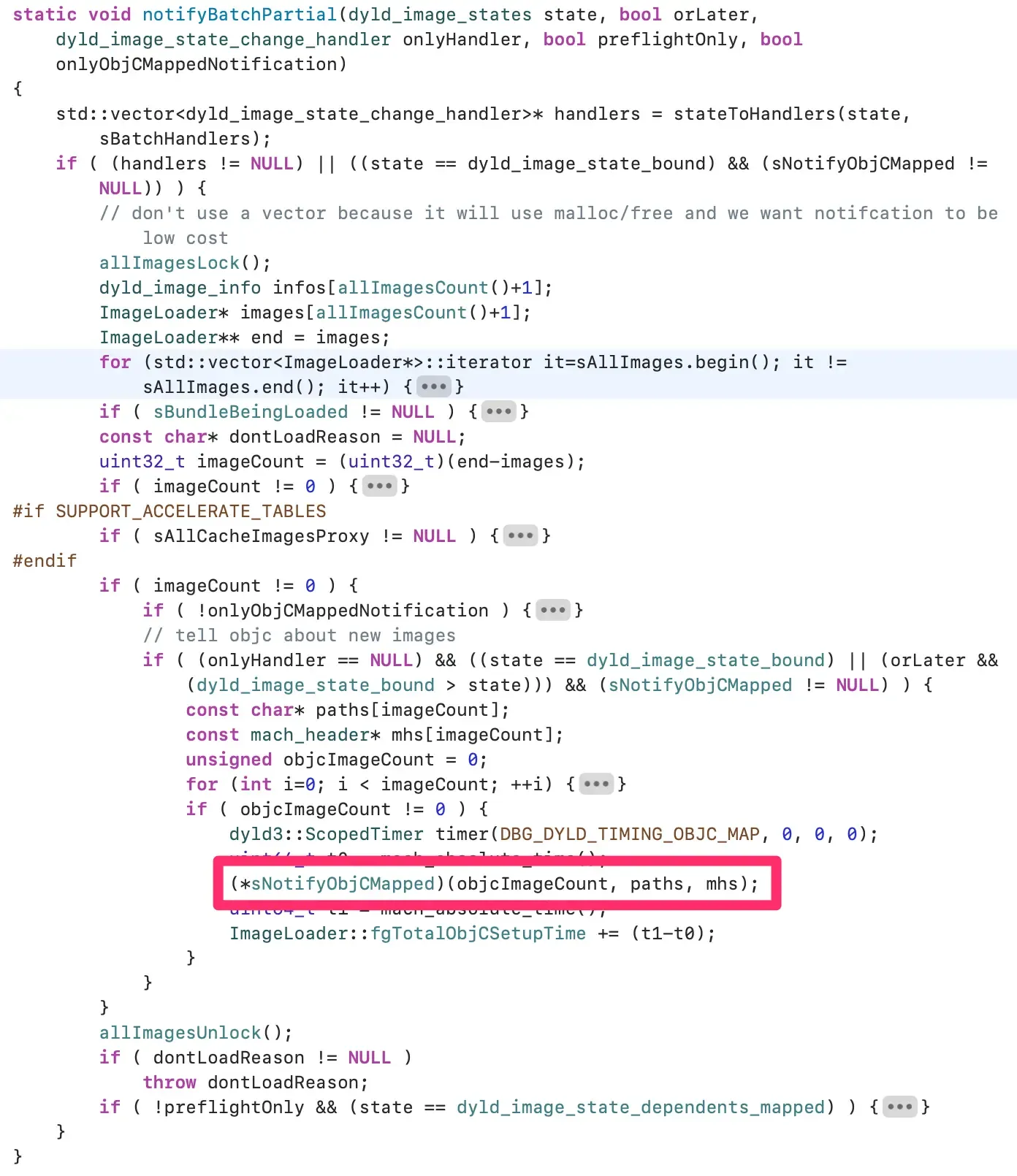
再次全局搜索 notifyBatchPartial 哪里调用了,在 registerObjCNotifiers 源码中找到了它的调用
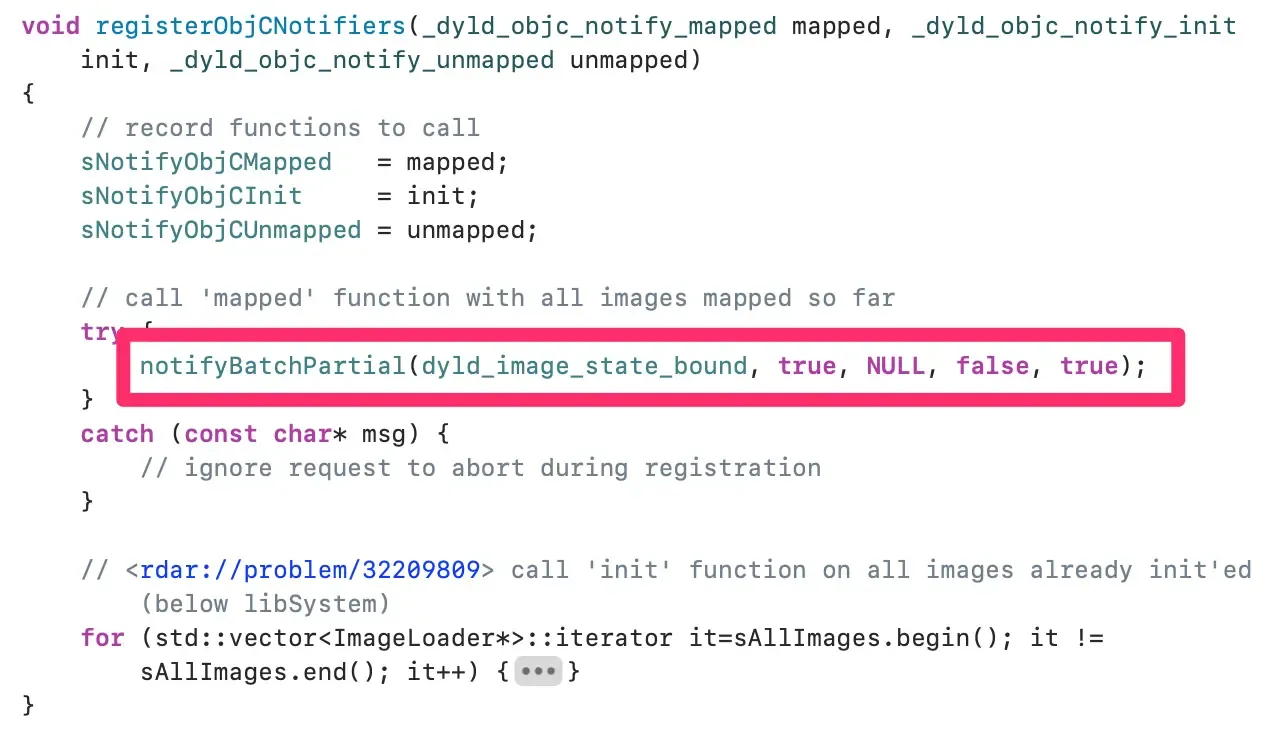
由此也可以证明 map_images 先于 load_images 调用(先 map_images 后 load_images)
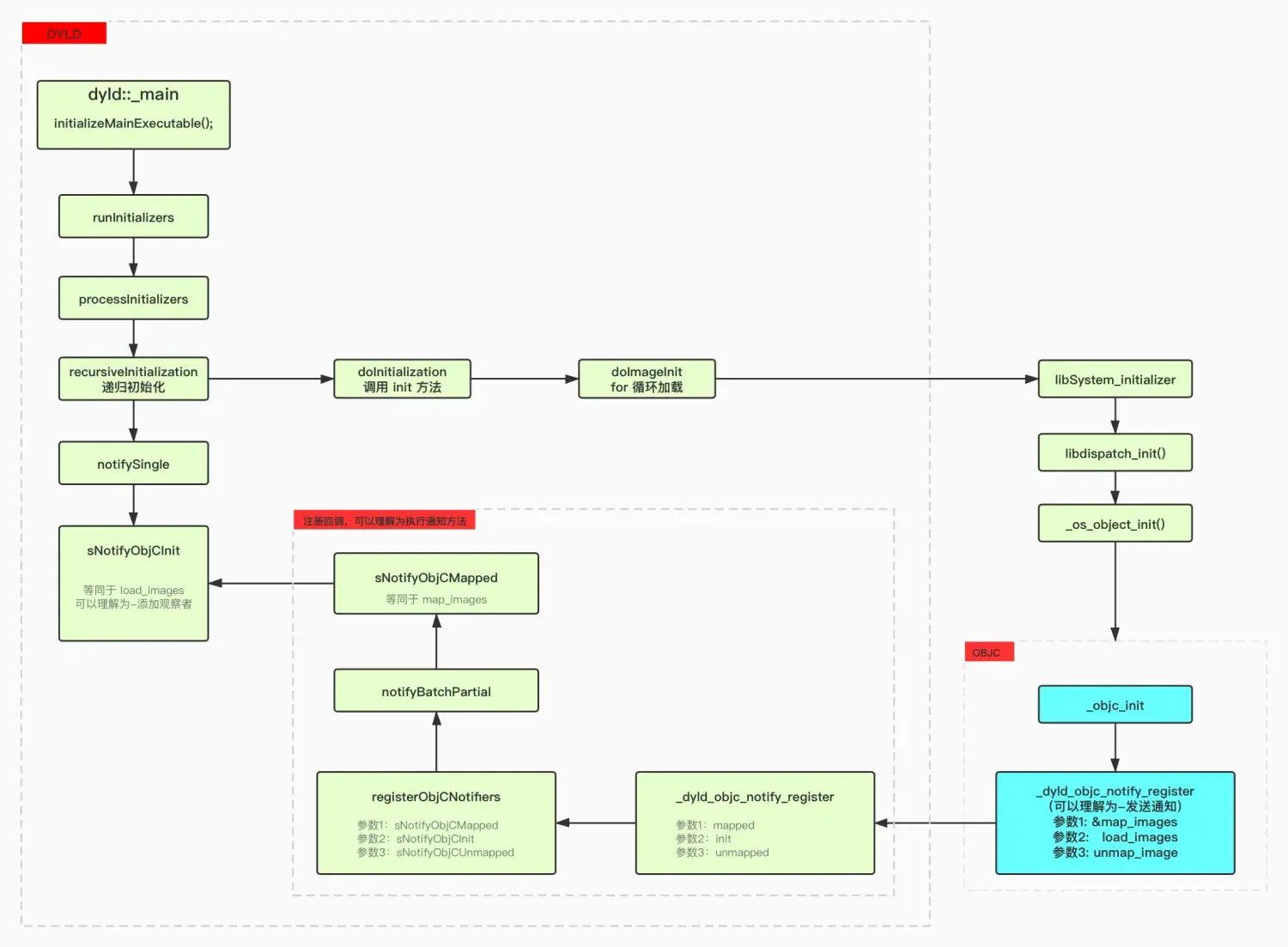
在 dyld 中注册回调函数,可以理解为添加观察者
在 objc 中注册 dyld,可以理解为发送通知
触发回调,可以理解为执行通知的方法
dyld 与 objc 的关联示意图如下
文章均来自互联网如有不妥请联系作者删除QQ:314111741 地址:http://www.mqs.net/post/10447.html


添加新评论